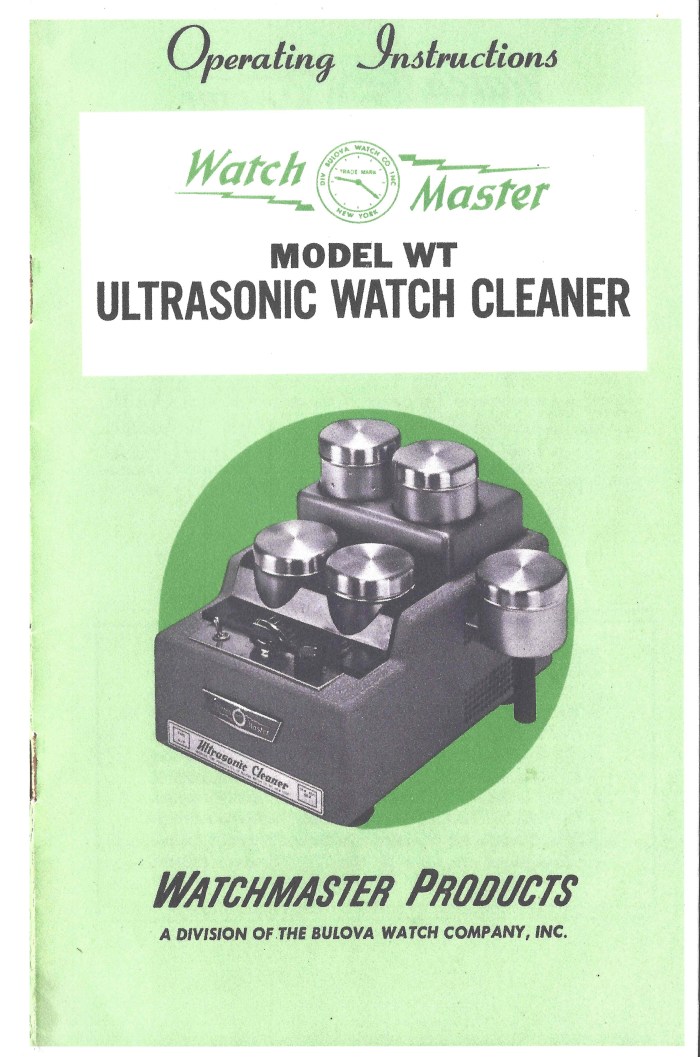
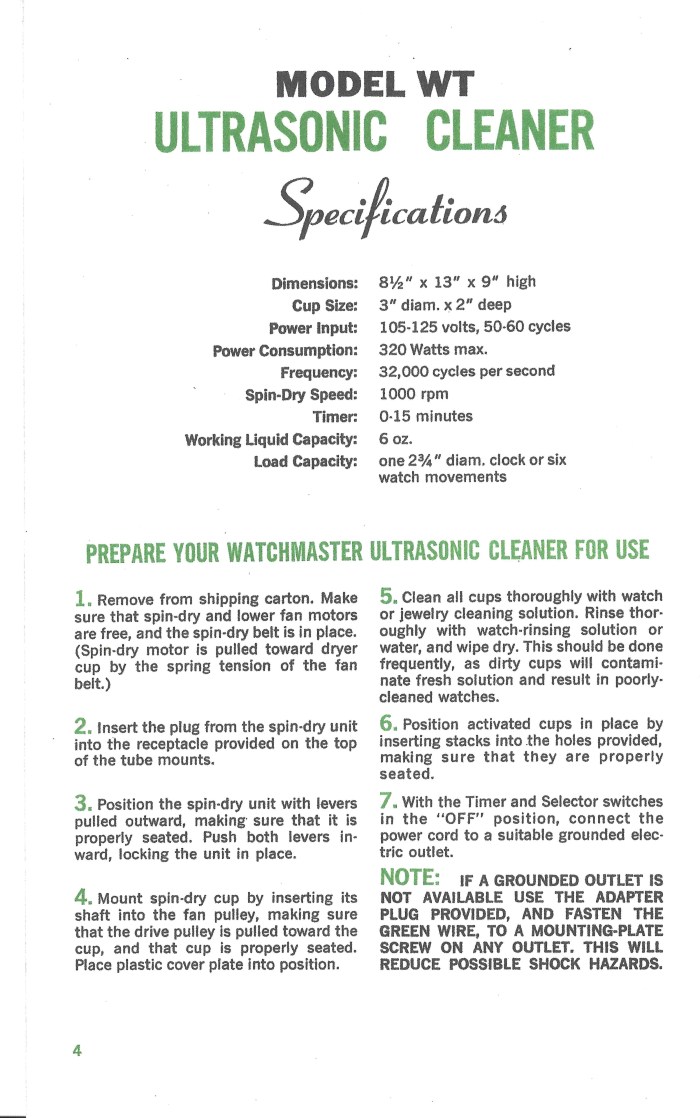
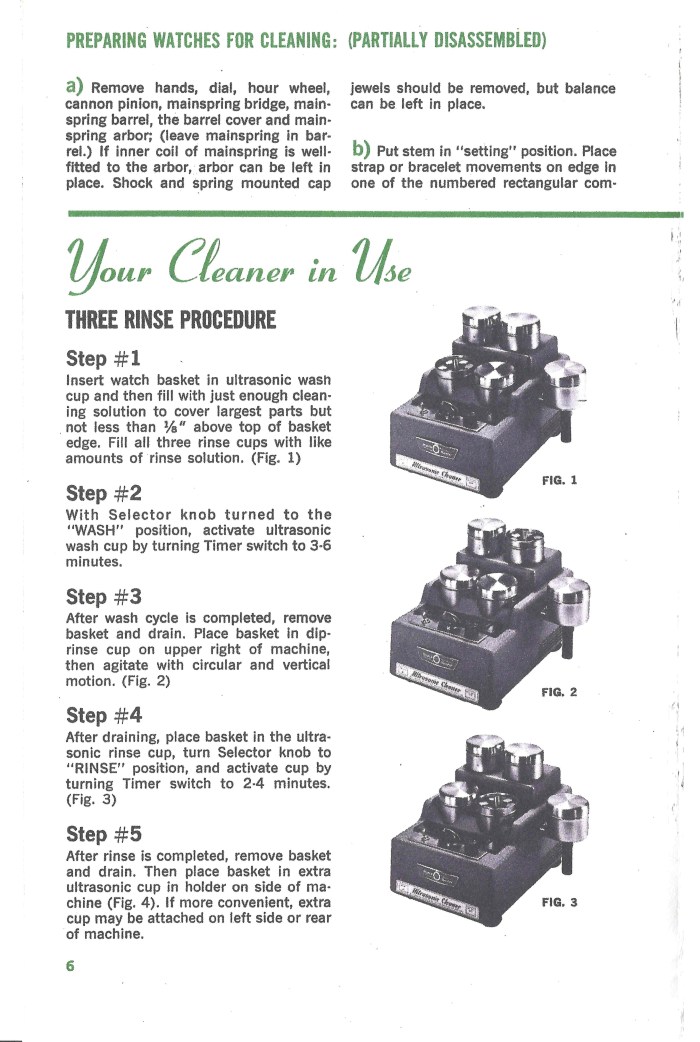
While I was attending the Texas Institute of Jewelry Technology’s Horology program, we used a combination of three ultrasonic cleaning machines to clean the watches we serviced during the program. For the more delicate parts, including the pallet, the balance (complete or dismantled), shock settings and springs, and cap jewels, we used a McKenna Laboratories CH-17, which I’ll post about in the coming weeks. there was a large Quantrex heated ultrasonic tank for cleaning bracelet and case parts. For everything else, we used one of three WatchMaster WT cleaning machines with one ultrasonic wash cup, one dip rinse cup, two ultrasonic rinse cups, and a heated spin dry cup. The machine itself can only hold two ultrasonic at a time, so there is an optional clip-on cup holder so that you can add a second ultrasonic rinse cup to the cleaning cycle. All in all these machines are very reliable and fairly simple to repair in most cases. Despite lacking the convenience of a fully automated cleaning cycle, the small size of the WT as well as the durability and excellent results the machine provides, cause many watchmakers to leave space on their benches for this old workhorse of a machine.
There were actually two models of this style cleaning machine that preceded the WT as well as one model of the same style that followed it. I’ll discuss the model that followed the WT in a later post. The models that came before were the A1 and A1T respectively. It is highly advisable to avoid the WatchMaster A1 as it has a tendency to overheat and burn up. The A1T fixed whatever problems caused the overheating. I believe I have read that it was something to do with the transformer used in the A1. The A1T is functionally the same as the WT with some minor electrical differences. All three models (WT, A1T, and A1) featured very similar paint jobs. The upper area where the drying and dip rinse cups are located was red while the body of the machine was a matte grey color with a wrinkle texture.
All three operate at 32kHz, a frequency that sits between the more commonly used 28 kHz and 48 kHz frequencies. At 32kHz the cavitation is powerful enough to dislodge “large” contaminants from the item(s) being cleaned in a short period of time but also delicate enough that small contaminants will release from more fragile materials without damaging the surface finish or really thin layers of metal plating. You might not think that damaging plating is a real concern but, on new ultrasonic tanks, a fairly common test of cleaning power is to hold a piece of aluminum foil just off the bottom of the tank and watch as it punches holes in it. The thickness of “gold” and actual gold plating on many newer / lower-end watches at the time of these machines production could be pretty thin. Even the thickness of the gold in gold filled pocket watch cases well past the end of their prescribed twenty or thirty year warranties can be pretty thin if the watch spent time in a particularly abrasive pocket.
On my bench sits a Watchmaster WT and two Watchmaster WT MArk 2 cleaning machines. One of each model are working and the second Mark 2 is the unit I keep in case I need to swap out parts. I love these for their simplicity of operation and their well implemented engineering. They require more touch time , as opposed to something fully automatic like a Bulova VC-10 (which is vibrasonic not ultrasonic) or an L&R Vari-matic, but they don’t use nearly as much cleaning solution at one time as either of those machines. Also, The Watchmaster cleaners don’t take up a ton of room like the vc-10 or sling cleaning solution all around like the Varimatic. My only complaint is that you cannot the ultrasonic switched on anywhere near where you have your timing machine set up. Analog machines, like the Vibrograf B200A or Tickoprint Transistor TP, and digital machines like the Witschi Watch Expert or Chinese Timegraphers all react similarly to being near an ultrasonic cleaner. They wig out big time unless you have the gain set so low that it can just barely pick up noise from the watch, and even that isn’t guaranteed to work. I’ve not had to tackle actually repairing any of these machines, but I have had them pretty far apart and, while they appear relatively straightforward electrically, I’ve decided not to explore further until I have to.
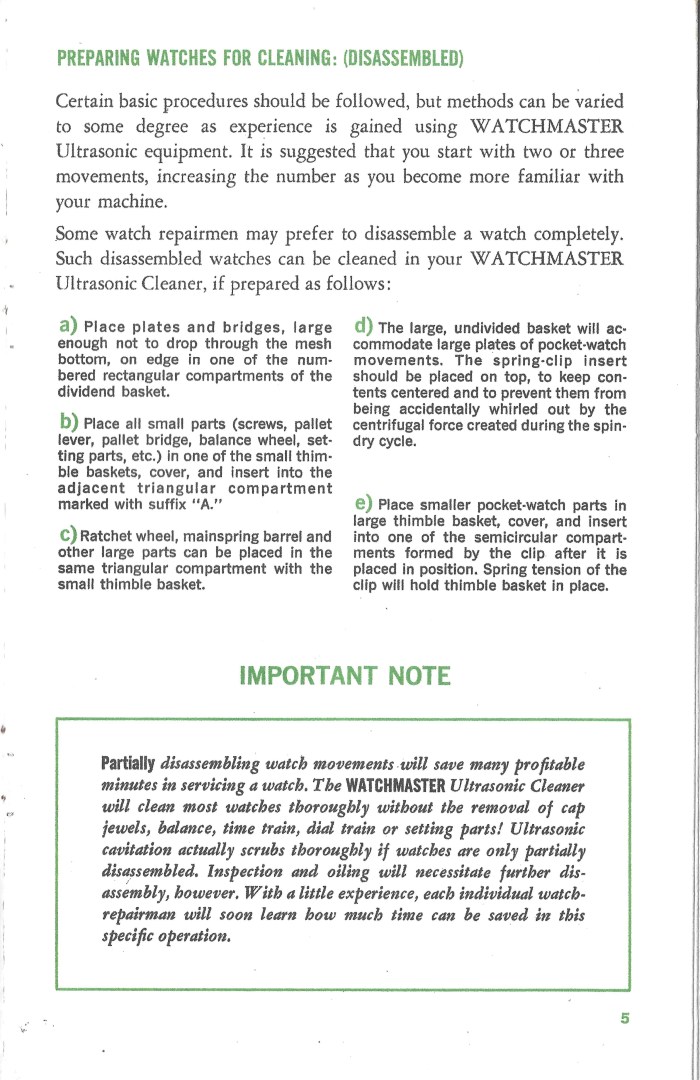
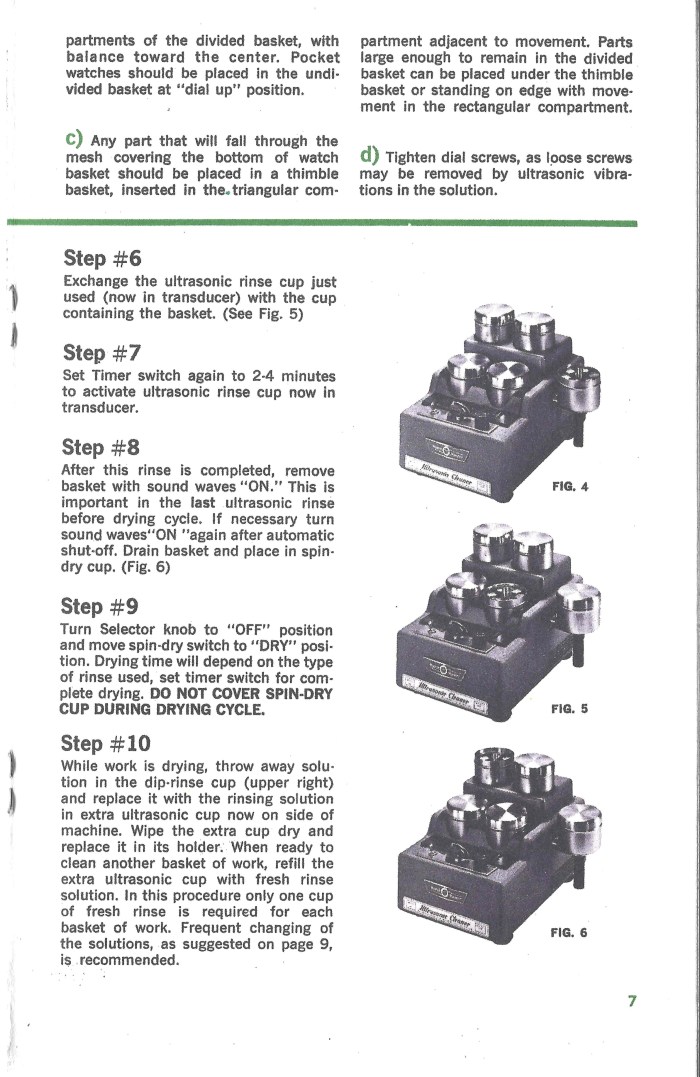
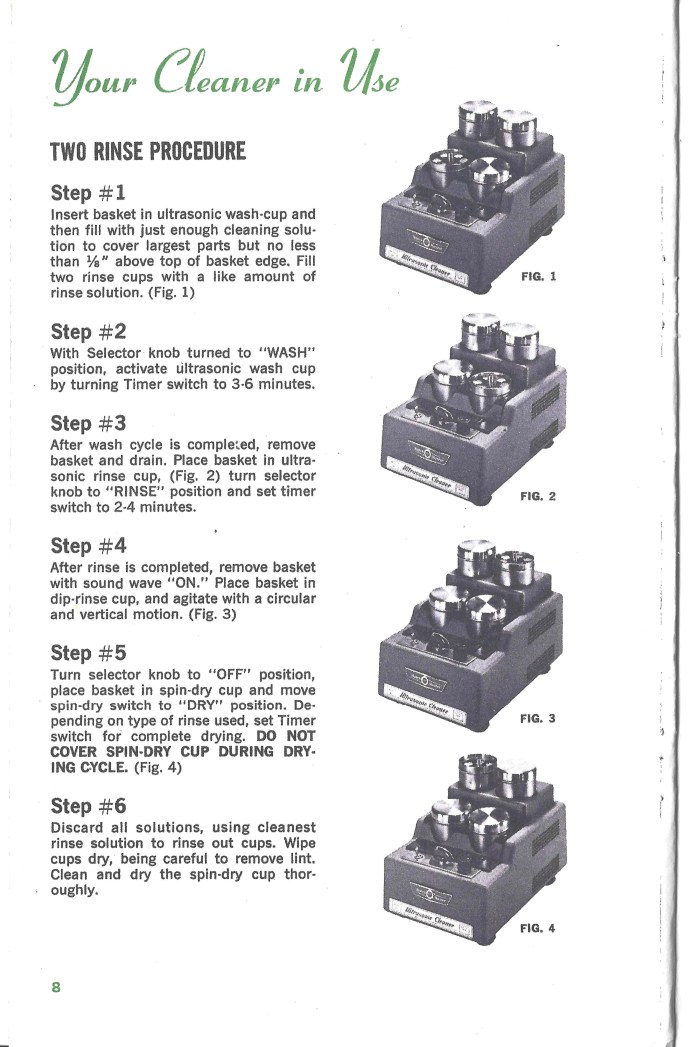
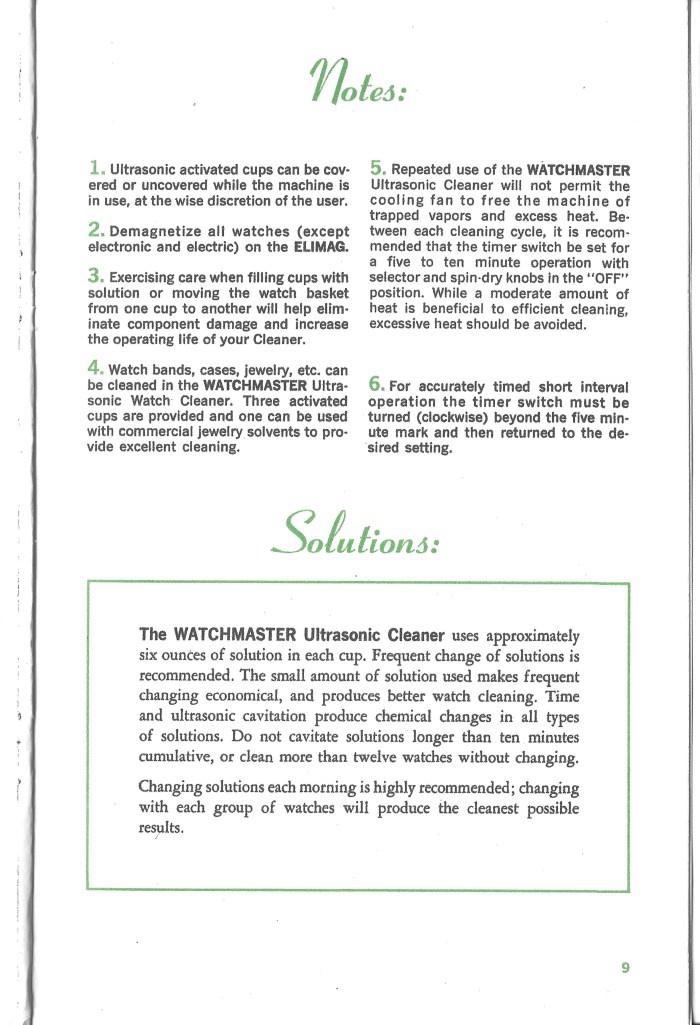
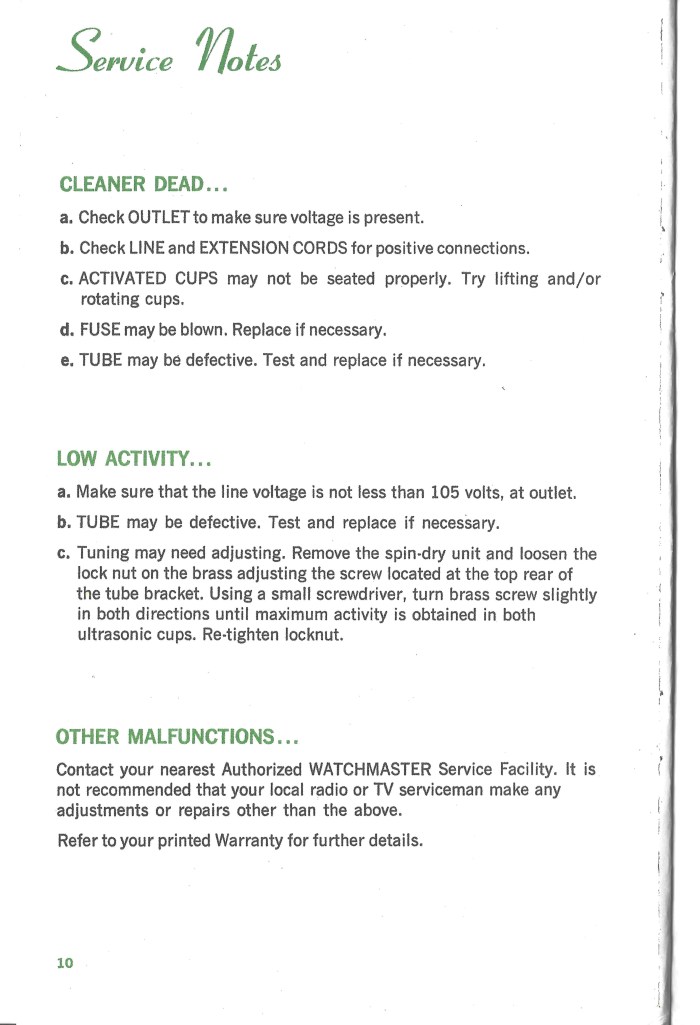
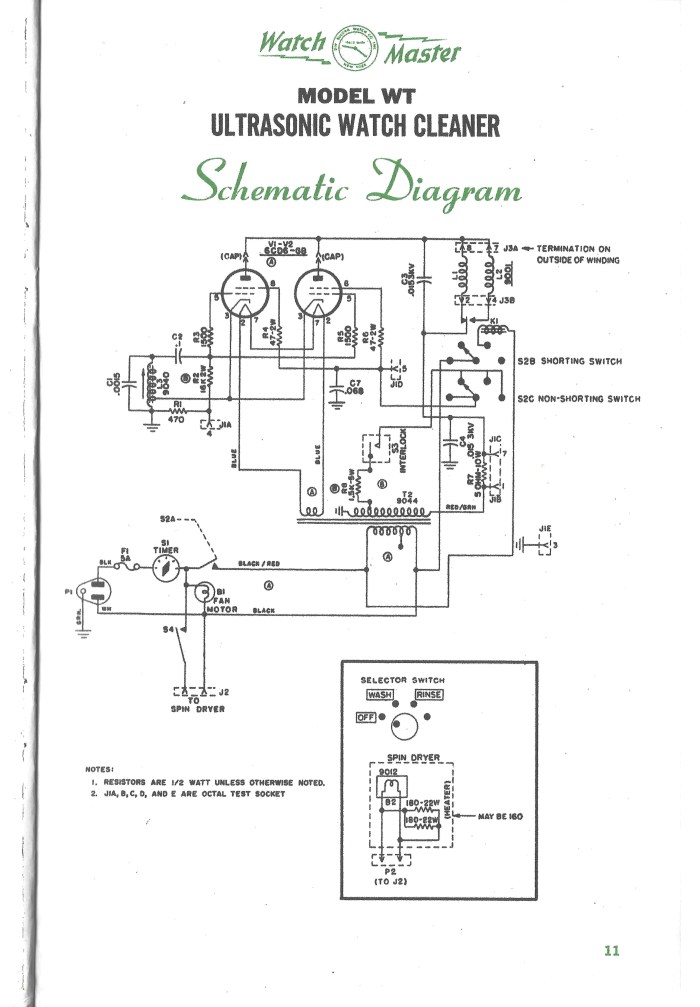
The pages that follow below are scans of the official Operating Instruction Manual for the WT. The final page before the back cover shows the schematic.



 Horological Stuff
Great machine! Will last a repair person a lifetime. They are easy to fix too.
LikeLike
i have 3 watch master cleaning machines heed repairing please call me @561 302 4933 s. flash.
LikeLike
Where is your location?
LikeLike
Where can i get fuses, and or tubes
LikeLike
Both are readily available on e-bay. The tubes are about $10 each, but better to test them first with a tube tester.
LikeLike
Your local hardware store 6amp 6 1/4
LikeLike
My 87 year old dad wants to know if there is a service center in the St Louis Mo area? His Watch Master needs repair.
Lori
lorihedrick@att.net
LikeLike